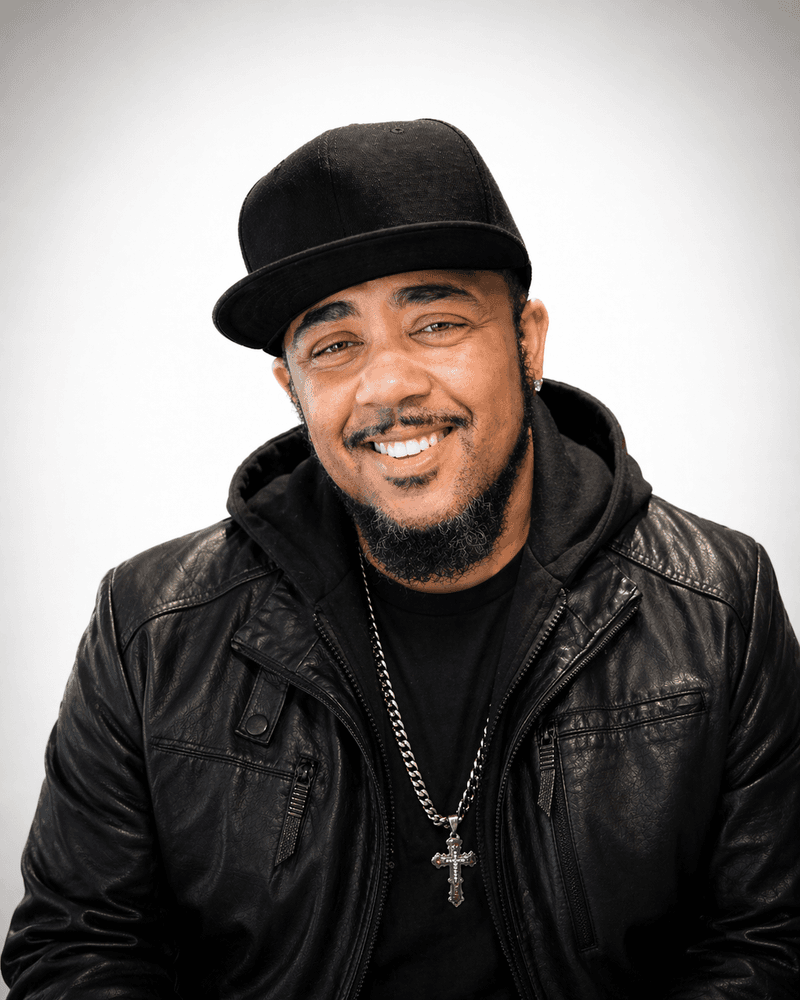
MINNEAPOLIS — Krishawna once wanted the things many emerging artists want: a bigger platform, greater recognition and the kind of success that could change her life and the lives of the people she loves.
That is no longer enough.
The Sacramento, California-born, Minneapolis-based recording artist says her priorities have shifted as her faith has deepened. For Krishawna, music is no longer simply a path toward recognition. It has become a responsibility.
“My main focus with this vehicle now, without a doubt and with the surety, is to win souls for Jesus Christ,” Krishawna said during an appearance on WaveNation’s “Indie Uncensored.” She described herself as an ambassador for her faith while acknowledging she is still learning as she goes.
That conviction runs through her latest project, “Truth Be Told,” a six-song release centered on faith, gratitude, identity and spiritual growth.
It also represents the latest chapter in an artistic journey that began with something much less certain: figuring out who Krishawna was.
Finding her voice
Krishawna remembers growing up in Sacramento as a young girl filled with dreams, hope and the desire to make a positive impact.
The city also taught her that talent alone was not enough.
“If you are going to survive and stand out, there has to be some special, unique quality about you,” she said. Krishawna connected that realization to branding and the importance of developing an identity beyond simply looking or sounding like everyone else.
Her musical education was wide-ranging.
She grew up hearing artists including Aretha Franklin, Teddy Pendergrass, The O’Jays, The Clark Sisters, Shirley Caesar, Snoop Dogg and others across gospel, R&B, hip-hop and rock. Tina Turner became an important influence because of her energy on stage, while Ronald Isley stood out for his smooth delivery, style and ability to command an audience.
But performing first entered Krishawna’s life through dance.
As a child, she watched “In Living Color” and gravitated toward the Fly Girls. She wanted the outfits, the movement and the excitement of performing. Her parents recognized the interest, and her mother later helped prepare Krishawna and her siblings for community talent shows.
Singing took longer to become part of the plan.
While in school, a friend heard Krishawna singing a Kim Burrell song and told her she could sing. Krishawna, who had not been openly performing as a vocalist, asked him not to tell anyone.
He told everyone.
The reaction helped her begin taking her voice seriously.
Church would become another training ground. Krishawna said growing up in that environment taught her how to stand in front of people and helped develop her stage presence.
But as she grew older, church became about much more than performing
Separating faith from performance
Krishawna speaks openly about the difference between being raised around religion and developing a personal relationship with faith.
As a child, she remembers a youth pastor telling the group that Jesus had a purpose for each of them. The statement stayed with her because it made faith personal. Instead of only knowing what she had been taught, she began asking what that purpose might mean for her own life.
Another early mentor would have an equally lasting influence. Krishawna said a woman from church asked her mother for permission to mentor her. Krishawna initially went to the woman’s home to do small jobs after school, but the visits also included conversations about Scripture and faith.
Years later, Krishawna said she began to understand those lessons differently.
She also began questioning what she saw around her.
Krishawna said she learned that people could know how to “do church” without necessarily living according to the faith they professed. That realization forced her to separate religious appearances from what she believed was an authentic relationship with God.
Her own spiritual reckoning eventually became more personal.
Krishawna described experiencing a moment of healing that changed how she approached her life and art. She said the experience made her more conscious about the things she consumed, said and created.
That awareness changed the weight she placed on her music.
“I’m responsible for what I put out into the atmosphere,” she said.
For Krishawna, that means songs now have to do more than sound good.
They have to say something.
‘Full Disclosure’ was only the beginning
Krishawna’s debut project, “Full Disclosure,” introduced listeners to an artist willing to write about relationships, faith, insecurity and personal struggles.
Looking back, she sees it as both an honest beginning and evidence of how much she still had to learn.
One of the project’s most vulnerable songs was “Addiction.”
Krishawna said the record came from a real struggle she was experiencing while writing the project. She believed at the time that she had overcome it.
She later realized she had not.
“There’s a song on my album ‘Full Disclosure,’ and it’s called ‘AdDicktion,’” she said. “I wanted to be vulnerable in that because I was struggling with an addiction.”
She did not identify the specific addiction during the interview and has intentionally left that detail private.
What matters to her now is what she learned afterward.
The connection between “Full Disclosure” and “Truth Be Told” is embedded in that discovery: Disclosure was not necessarily the same thing as complete healing.
Krishawna said she eventually had to admit that what she thought had been resolved was still affecting her.
That realization gives her newest project its title.
“Truth Be Told” is not simply another version of openness. It reflects a different level of self-examination.
Indie Uncensored Full Interview
Krishawna on Indie Uncensored
Recognition from overseas
Krishawna’s recording career began in an unusual way.
Before she had a professional catalog, she recorded a radio drop for her music representative. Listeners overseas heard the voice and began asking who she was and where they could hear her music.
There was just one problem: There was no music to send them.
That interest helped push her into the studio, where “Full Disclosure” began taking shape.
The project later received recognition from SoulTracks, which described her as an artist with something to say.
For Krishawna, the validation mattered because she was still discovering whether people would connect with the stories she wanted to tell.
International listeners continued to play an important role in her development.
After moving to Minneapolis, Krishawna built relationships with family and members of the Twin Cities music scene. She said Minnesota influenced her sound, particularly by adding more funk to a musical identity already shaped by California and multiple generations of soul, R&B, gospel and hip-hop.
But she said local recognition was slow.
“I will be honest, they did not receive me until I started getting recognition out of the country,” Krishawna said of the Twin Cities music community.
Krishawna believes overseas audiences are often more willing to discover independent soul artists before they have mainstream machinery behind them.
She said those listeners appreciate witnessing the development of an artist from the beginning instead of only encountering the finished product.
The real meaning of ‘I’m Done’
Krishawna’s follow-up project, “Second Offering,” became another turning point.
The record allowed her to become freer in the studio and less concerned about outside expectations. She said she wanted to create something she personally enjoyed listening to.
One of its key songs, “I’m Done,” received attention overseas.
Its title sounds like the beginning of a breakup song.
It is not.
Krishawna said “I’m Done” was written from the imagined perspective of God speaking to her.
The concept came from examining how much time and attention she gave to other parts of her life compared with her relationship with God.
“I’m Done was basically me talking to me,” she said, explaining that she imagined what it would sound like if God told her he was done. Pasted text(1)
Listeners often interpreted the record as a conversation between romantic partners.
Krishawna said the real relationship at the center of the song was spiritual.
That double meaning is characteristic of her writing. The songs can operate inside familiar R&B structures while carrying messages that reveal themselves more fully with closer listening.
Music for people outside the church
That approach became even more intentional with “Lyrics for Your Soul.”
Krishawna said the project was intended to reach a listener’s “inner man,” rather than simply provide entertainment.
She also does not want her music confined to one audience.
Krishawna said she is comfortable making music that does not fit neatly into traditional gospel, R&B or inspirational categories because she wants people outside the church to hear it, too.
That philosophy is perhaps best illustrated by “I Told Ya.”
Krishawna recalled a DJ sending her footage of the record being played at a skating rink.
The song has energy suitable for that environment, but its subject matter is spiritual. Krishawna said “I Told Ya” deals with the rapture, choices and running out of time.
She also said the track reached No. 1.
For Krishawna, the setting did not dilute the message. It proved that faith-centered music did not necessarily have to sound like traditional church music to reach people.
Telling the truth
“Truth Be Told” takes that philosophy further.
The six-track project includes “So Many,” “Truth Be Told,” “You Say,” “Love Out Loud,” “Hometown” and “Corner,” featuring Brenda Williams.
“So Many” begins with gratitude.
Krishawna said the song focuses on things that can be easy to overlook — waking up, breathing, having a home, family, friendships and the ability to care for oneself.
“So many reasons to be grateful,” she said.
The title track makes her spiritual position explicit.
For Krishawna, the truth anchoring the project is her belief in Jesus and the choice people make about what they will represent.
“You Say” continues that conversation. Krishawna described the song as an attempt to communicate the personality and power she sees in God through language that feels contemporary and conversational.
Then there is “Love Out Loud.”
Krishawna defines the phrase through action.
“Loving out loud just requires sincerity, honesty, selflessness, willingness to help, and just share it, show it, and be happy about doing it,” she said.
“Hometown” sounds geographic, but its meaning is spiritual.
During the interview, Krishawna recalled imagining herself as a child meeting Jesus at a sandbox. As adulthood took over, she pictured herself wandering away while Jesus continued to show up.
For her, returning home means returning to that relationship and sense of spiritual innocence.
The project closes with “Corner,” featuring her mother, Brenda Williams.
Krishawna said the title carries two meanings. Her mother has repeatedly been in her corner throughout her life, but she also believes Jesus has remained in both of their corners.
The song is both an expression of gratitude toward her mother and acknowledgment of the person who introduced her to her faith.
The cost and freedom of independence
Krishawna has remained an independent artist even as opportunities from larger industry players have come her way.
She said some offers were not the right fit because of the financial cost, what was being offered or what she would have been required to give up.
There are clear disadvantages to independence.
Major-label funding is not available to cover every expense. Krishawna is responsible for paying musicians, staff and other costs associated with building her career.
But independence also gives her greater control.
During the “Truth or Full Disclosure” segment of the interview, Krishawna said one of the biggest business lessons she learned was to stop saying yes to everything.
She said she had also learned not to allow people to take advantage of her kindness.
That lesson echoes something she learned much earlier in Sacramento: Survival requires knowing what makes you different, but it also requires knowing when an opportunity is not right for you.
Success has a different meaning now
At the end of the conversation, some of Krishawna’s shortest answers revealed the most.
A truth she has had to accept about herself?
She likes to be right.
Something people assume about her that is not true?
That she has it all together.
Something her music has not fully revealed?
Her personal insecurities.
And something she no longer needs permission to do?
“Boldly talk about Jesus.”
That may be the clearest description of where Krishawna is today.
Faith was present in her earlier work. So were struggle, relationships and vulnerability.
What has changed is her willingness to place that faith at the center of the conversation.
“Truth Be Told” is not the story of an artist who has everything figured out.
Krishawna is clear that she does not.
It is the story of an artist who believes she finally understands what she wants her platform to accomplish.
The pursuit is no longer simply about becoming known.
It is about knowing why she is there in the first place.